
Is Sun Bum Reef Safe? Everything you Need to Know About Reef Safe Sunscreen
When Hawaii enacted Hawaii Act 104 banning the use of any sunscreen containing oxybenzone and octinoxate, a much-needed spotlight was shone on the sunscreen industry. This has left many wondering if their favorite sunscreen is contributing to adverse effects on our oceans.
I know I was! Which lead me to the questions, is my favorite sunscreen Sun Bum reef safe? What does reef safe even mean? And what can I do to help save our reefs?
If I had these questions I knew other people had to as well so I did a ton of research and even spoke with sunscreen brands (including Sun Bum) and Non-profits to get to the bottom of it. In this article, I not only dig into whether Sun Bum is reef safe, I also explain how to find reef safe sunscreens and give recommendations on personally tested reef safe sunscreens.

Is Sun Bum Reef Safe?
According to the Sun Bum website, they have successfully eliminated all oxybenzone and octinoxate from all of their sunscreens to be compliant with Hawaii Act 104. Great news!
But I couldn’t find much else on the site about the other ingredients listed on the HEL list as being harmful to reefs (you will learn more about this below) so I had to do some digging.
Through my reseach, I found that 7 out of the 47 products currently listed on their website could be considered “reef-safe” according to the HEL List.
The majority of the Sun Bum sunscreens are chemical sunscreens but they do have a well-rounded mineral line which is great to see. However, I couldn’t find any information on their website about the particle size of their Zinc Oxide and Titanium Dioxide. After talking to their customer service team I was happy that they confirmed that none of their Zinc Oxide and Titanium Dioxide are non-nano sized.
My next step was to dig into the ingredients that go into their mineral line and I was surprised to find that only 50% of their mineral line was free of any of the ingredients listed on the HEL List. The biggest offender was microplastics like Polyamide-5 and Polyester-8.

Which Sun Bum Sunscreens are Reef Safe?
So which Sun Bum products are actually safe for our reefs?
- Mineral SPF 30 Sunscreen Lip Balm
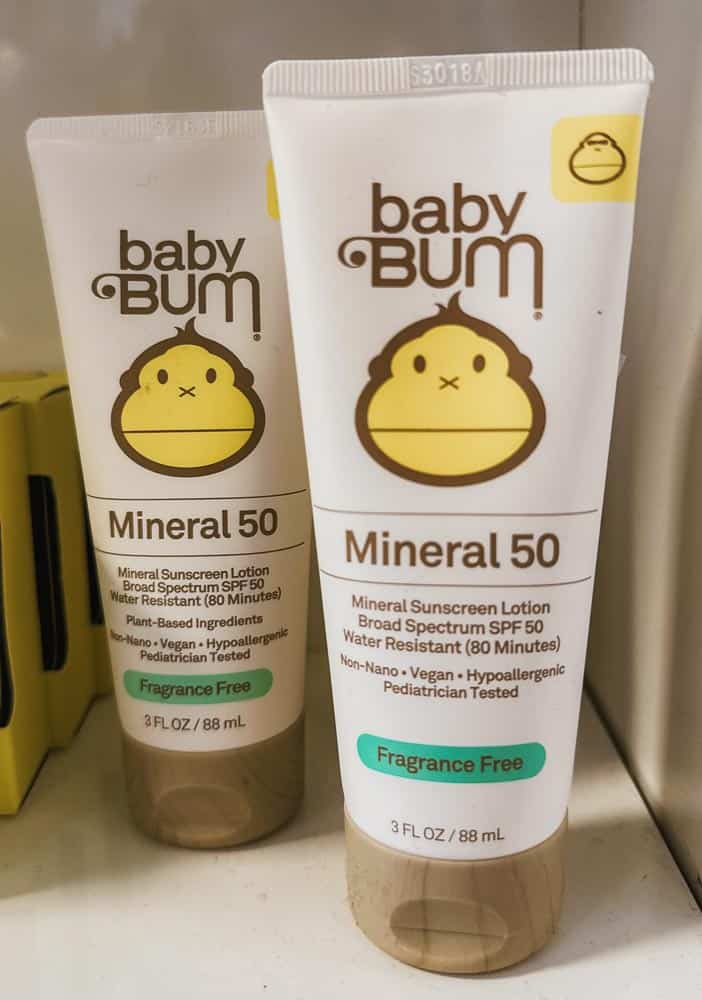
- Baby Bum Mineral SPF 50 Sunscreen Lotion
- Mineral SPF 50 Sunscreen Lotion
- Mineral SPF 50 Sunscreen Face Stick
- Baby Bum Mineral SPF 50 Sunscreen Face Stick
- Daily Mineral Sunscreen Moisturizer SPF 30
- Mineral SPF 30 Sunscreen Lotion
And just for a bit more of a look under the hood, here are the Sun Bum mineral products that I found to not be reef safe. (All other sunscreens not listed above were also not considered reef safe due to containing ingredients on the HEL list)
- Mineral tinted sunscreen – contains polyamide-5
- Mineral SPF 30 Sunscreen Face Lotion – contains polyamide-5
- Baby Bum Mineral SPF 50 Sunscreen Spray – contains polyester-8
- Baby Bum Mineral SPF 50 Sunscreen Roll-On Lotion – contains polyester-8
- Mineral SPF 50 Sunscreen Roll-On Lotion- contains polyester-8
- Mineral SPF 30 Sunscreen Spray – aerosol
- Mineral SPF 50 Sunscreen Spray – aerosol
Why is it important to use reef safe sunscreen?
The majority of commonly used sunscreens contain ingredients that are harmful to many species in our oceans including green algae, coral, mussels, sea urchins, fish, and dolphins. When these species are affected a chain reaction occurs creating downstream issues for other marine life including at risk species.
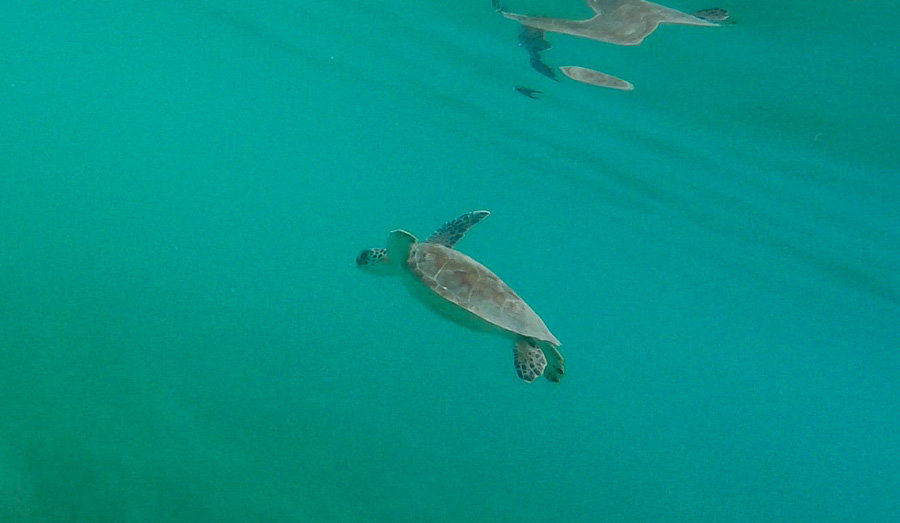
Nearly all species of sea turtles are classified as endangered. Many of them find their food sources in coral reefs.
And according to the National Parks Services, it’s estimated that 4,000 to 6,000 tons of sunscreen is washed off into our oceans worldwide every year! This includes going directly into the ocean or runoff water entering waterways from showering. With majority of the sunscreen products on the market containing ingredients that are not safe to our reefs, we are seeing major damages to our marine ecosystems.
What does reef safe sunscreen even mean?
First, it’s important to know that “reef safe” and “reef friendly” claims are not regulated. This means that sunscreen companies can make up their own definition of what this means. Therefore it’s important that you know which ingredients found in sunscreens can actually be harmful to marine life and to check the labels before trusting these claims.
It’s also important to know that just because a sunscreen complies with Hawaii Act 104 does not mean it’s fully safe for our reefs. Hawaii Act 104 is a ban on just 2 chemicals found to be harmful to reefs when in fact there is a much longer list you need to be aware of.
So how do you actually know if a sunscreen is safe for reefs? Check the label to make sure it does not contain any of these harmful substances from the HEL List:
- 4-methylbenzylidene camphor
- Benzyl Paraben
- Butyl Paraben
- Butyloctyl salicylic acid
- Ethyl Paraben
- Homosalate
- Methyl Paraben
- Octinoxate
- Octisalate
- Octocrylene
- Oxybenzone
- Para-aminobenzioc acid (PABA)
- Propyl Paraben
- Propylparaben
- Triclosan
- Any form of microplastic sphere or beads
- Any nanoparticles like nano zinc oxide or nano titanium dioxide
- “Any of the nylon powders used in cosmetics and personal care products, such as Nylon-6 (polyamide 6), Nylon-10 (polyamide 10), Nylon-11 (polyamide 11), Nylon-12 (polyamide-12), all of the Orgasol polyamide product lines, any of the polyester plastic powders such as polyester-8, polyester-25, nylon glitters, polyester glitters, HDI/trimethylol hexyllactone crosspolymers, any of the polycarolactones, and any of the polyethylene powders or fibers.”
Mineral vs Non-Mineral Sunscreen
Overall best practice is to avoid chemical sunscreens altogether and opt for mineral based sunscreens. However, just because a sunscreen is a mineral sunscreen doesn’t always mean it’s safe for reefs.
Nano-particles
Zinc Oxide and Titanium Dioxide are the two most common active ingredients in mineral based sunscreen. Although they work great for sun protection, they also tend to leave a white cast on your skin when you put it on. Most consumers don’t like that so companies of started nanoizing these substances to help your skin absorb it better.
Although this may seem like a great solution, it’s actually bad for reefs, marine life, and potentially even for human health (I’m not a doctor though so I’ll leave that to the medical professionals). Therefore, you should look for mineral sunscreens that say “non-nano” or “non-micronized” Zinc Oxide and/or Titanium Dioxide. If it’s not specifically called on on ingredients, you can always check their FAQ or reach out to their customer service team to find out.
If the white cast of the sunscreen is a concern for you, some brands have started carrying tinted mineral sunscreens so that they can offer non-nano options and not have the issues of the white casts left behind.
Other ingredients
While researching to understand if Sun Bum is Reef Safe for this post I found many mineral sunscreens, including from Sun Bum, that still contained harmful ingredients from the HEL list.
So mineral is a great place to start, but you still need to look at the labels.

Are aerosol sunscreens ok?
No, aerosol sunscreens contain harmful nanoparticles and, most of the time, chemicals that can have harmful effects on reefs. Studies have also shown that only a fraction of the spray actually makes it onto your skin and instead ends up in the surrounding wildlife and environment. It’s best to take the extra time to apply sunscreen directly.
What is the best sun protection for the environment?
The best sun protection for you and the environment is staying covered/avoiding the sun whenever possible and only then after taking these precautions if your skin will still be exposed to the sun, use a sunscreen that is reef safe in line with the HEL list.
Avoid the sun
- Sit under an umbrella, tree, or other shade structure
- Plan your day so you aren’t in the sun during peak sun exposure hours
Wear protective gear and clothing
- Wear a hat
- UV sunglasses
- Cover up

Do I only need reef safe sunscreen if I’m going in the ocean?
You would think that it’s only essential to use reef safe sunscreen if you’re going into the ocean, however, no matter what, if you are using sunscreens with these chemicals it’s likely they will end up in our waterways after you shower them off or if they get in the sand at the beach which will result in the same harmful effects.
So make sure to opt for reef safe options anytime you are using sunscreen.
Other Reef Safe Sunscreens
Having to look product by product is a pain in the butt so I put together a list of my favorite reef safe sunscreens for you. I’ve tried and tested all of these sunscreens myself to make sure they are not only reef friendly, but that they also work!
As a descendant of Northern European countries, I am very fair-skinned and burn basically the minute I get into the sun. So not only am I a great test specimen, but I will also only recommend products that keep me sunburn free on my trips and time in the sun. No one wants a sunburn ruining their trips!
I also looked at other things we as eco travelers look for in products we buy to suggest, what I think are, the best of the best options I’ve found to date.
All Good
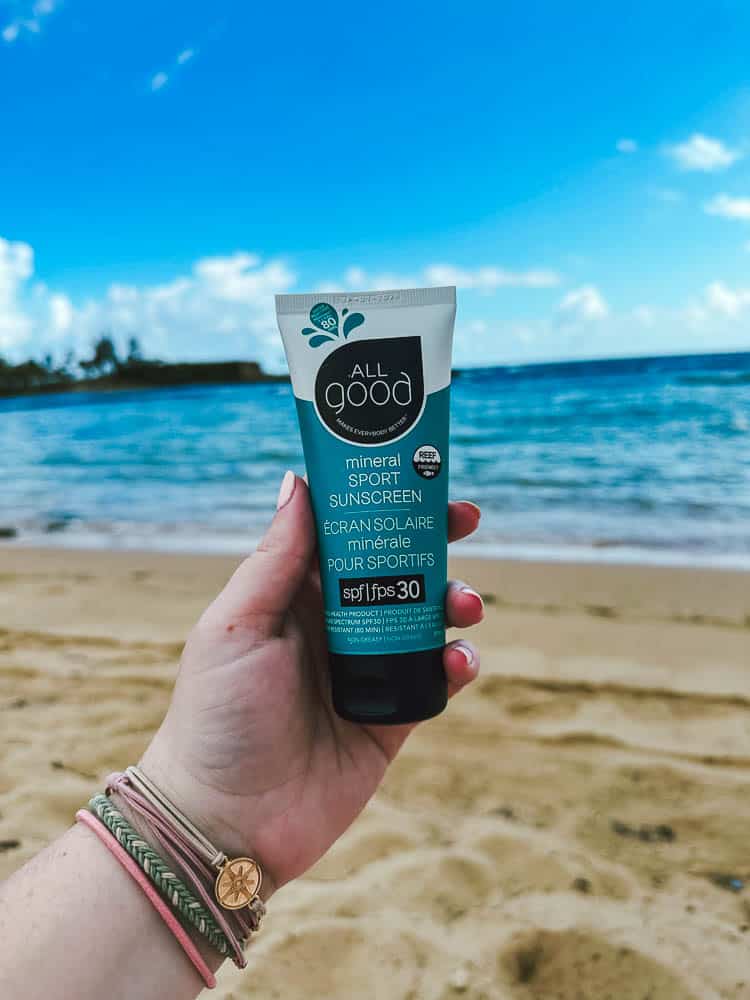
All Good is a women-owned company that also uses some organic ingredients in their products, has some plastic-free options, and has some cool products like SPF 15 lip & cheek tint.
Check out their plastic-free SPF 50 Mineral Sunscreen Butter!
Raw Elements
I used this sunscreen on my trip to the Caribbean and it worked great! They offer some plastic-free options and also use some certified organic ingredients which you know I’m here for! All of their sunscreens are made to ensure ingredients from the HEL list are not in them.
I use their SPF 30 face + body cream and their SPF 30 tinned tinted face moisturizer.
Blue Lizzard
Like I mentioned above, I have extremely fair skin so I can’t start the summer out with only 30 SPF. For my 50+ SPF to start me out I use Blue Lizard’s Sensitive Mineral Sunscreen. This stuff works great! My only issue with it is the plastic packaging.
Bonus: I noticed that Target started carrying this brand making it super easy to get.
Sun Bum
Even though we already answered the question “is Sun Bum reef safe” above, I still need to highlight my favorite product here. I love their SPF 30 Daily Mineral Sunscreen Moisturizer for everyday use. It has a slight tint so it’s perfect for your face!
Utu
Utu sunscreen is new on the scene and it’s safe to say I’m loving everything they stand for! Not only do they use the best ingredients in their products, but they also have a plastic-free mission and offer refillable options. All of their product containers are made from aluminum which is one of the most recyclable (and actually recycled) materials in the world.
As of wiring this article, all of their products are free of any ingredients that are harmful to reefs and plastic-free. The one I’m currently using is SPF 30 lotion.
It is on the pricier side, but they usually have sign-up discounts so you can try it out at a lower price.
Little Hands
Little Hands was created in Hawaii out of a personal desire for a sunscreen that was safe for us and the environment. They run their company with respect to the Ocean and Hawai’i values. Made in Hawaii with responsible plastic free packaging printed with soy inks, they’re the real deal!
Their sunscreen comes in classic white or 4 different tinted shades for multiple skin tones. I also love their After Sun Salve which I used every day on my last trip to the Caribbean.
As of wiring this article, all of their products are free of any ingredients that are harmful to reefs and plastic-free.
Final Thoughts
Overall my journey to answer the question “Is Sun Bum reef safe” was very eye-opening. I was shocked to find how many sunscreens contain ingredients that are on the HEL list. But I was also very happy to see that Sun Bum does have a handful of reef safe options and to see that they have eliminated Oxybenzone and Octinoxate in all of their products to comply with Hawaii Act 104.
I’m hopeful that as more customers begin looking for these types of products we will see that list grow over time as well as see more and more companies get on board.
Where and how we spend our money matters. It’s how we signal to the brands we love which types of products we want them to offer.
